

Food Service Temperature Monitoring Systems
24/7 Temperature Monitoring That Complies with HACCP Requirements
Percent of food lost or wasted in food service establishments 0
E-Control Systems (ECS) offers a complete IoT remote wireless temperature monitoring solution for the food service industry. Whether you are a school district, restaurant, processing plant, or operate any other food related business, we offer a fully automated enterprise-wide solution that makes it easy to monitor your entire food service operation and comply with HACCP requirements.
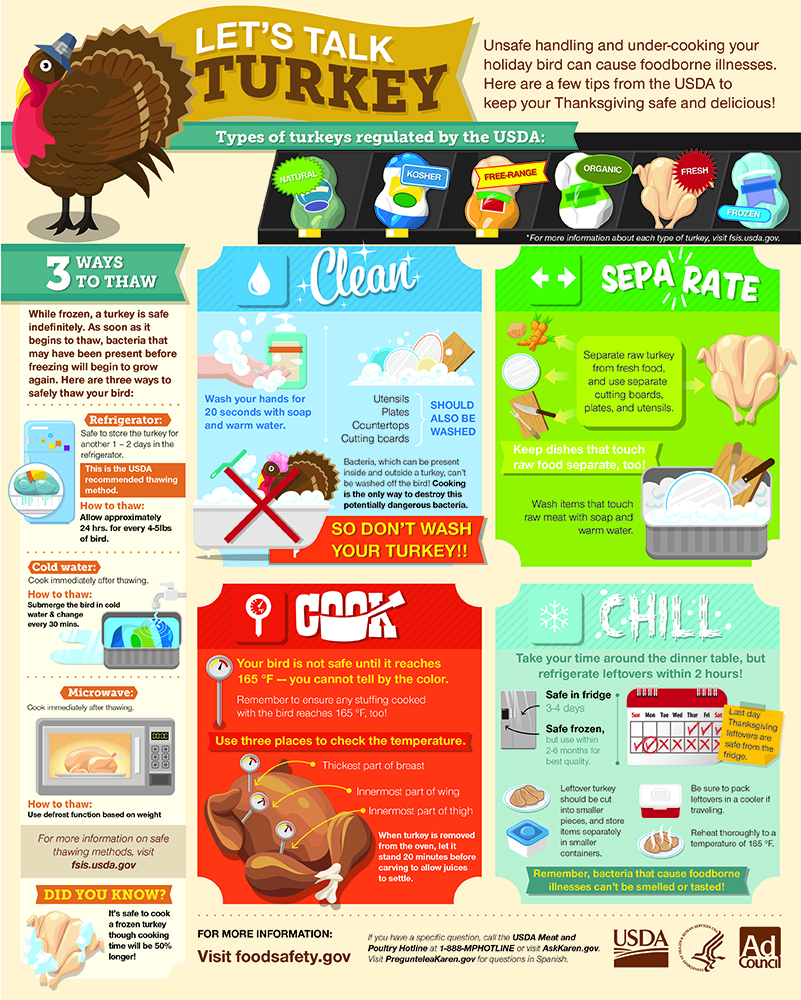
Temperature and time are the two most controllable factors for preventing foodborne illness.
How E-Control Systems Works for Food Temperature Monitoring
Monitoring food temperature and prioritizing compliance is a must in the food service world. With E-Control Systems you can view a snapshot of your entire operation 24/7 from any phone, computer, tablet, or device. As a leader in complete wireless temperature monitoring systems, E-Control Systems makes it easy to monitor food temperatures while reducing inventory loss and ensuring compliance with HACCP requirements. Invest more time doing what you do best, and let us help with the operations.
E-Control Systems Features for Food Service
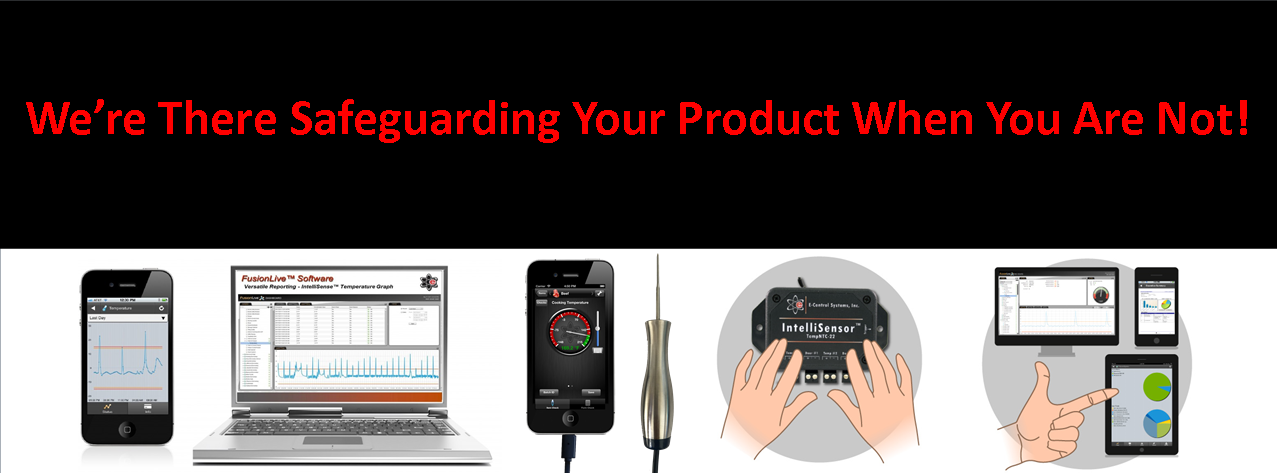
What makes E-Control Systems stand out? Our sensors and Intelligates can monitor any aspect of your Food Service business 24/7.

Why Leading Food Service Brands Choose E-Control Systems Technology
Most systems stop at “alerts.” We provide a complete operational management ecosystem that bridges the gap between hardware and compliance.
IntelliSense™ – 24/7 Inventory Protection & Loss Prevention: Go beyond simple thermometers. Our wireless sensors monitor every cabinet, walk-in, and critical control point 24/7. Whether you are on-site or remote, your inventory is protected by patented data-redundancy technology.
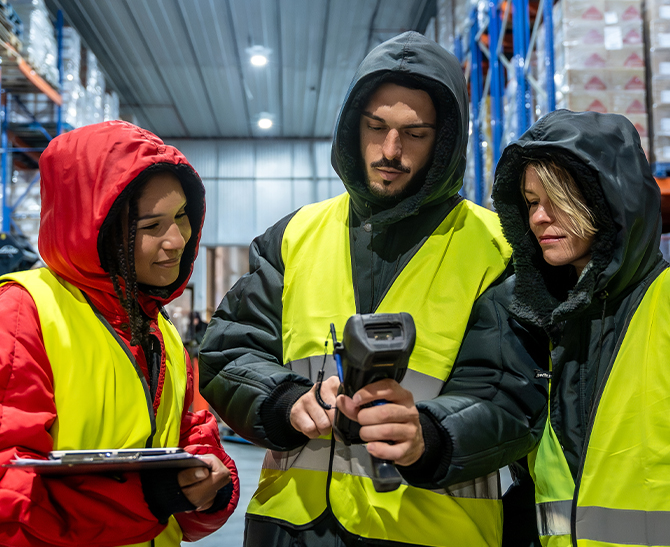
IntelliCheck™ – The End of Paper Records: Stop wasting labor hours on manual logs. Our handheld system automates the data collection for your entire cook-line—from receiving dock to the serving line—ensuring your SOPs are followed perfectly every time.
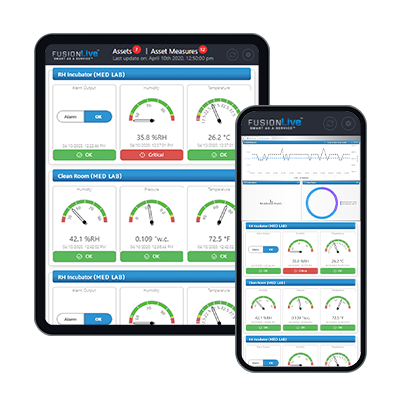
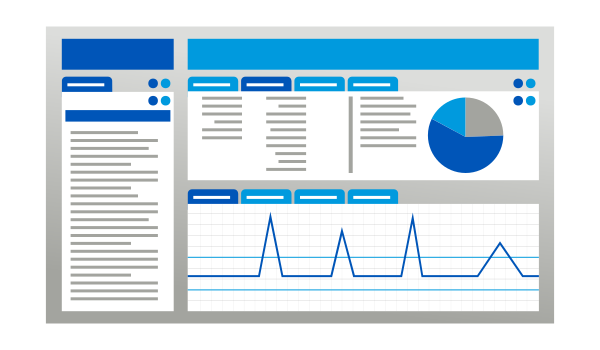
FusionLive™ – Your Command Center: Stop logging into multiple apps. View your entire multi-unit operation, manage preventative maintenance, and export audit-ready reports from one centralized, secure dashboard.
Our Food Industry Customers Include:



Understanding the Temperature Danger Zone and Bacterial Growth
Food safety is not just about following regulatory checklists. It is about mitigating the science of bacterial growth. The FDA defines the “Temperature Danger Zone” as the highly sensitive range between 40°F and 140°F (4°C and 60°C). When perishable foods enter this zone, harmful and legally devastating pathogens like Salmonella, E. coli, and Listeria do not just survive; they thrive, often doubling in number in as little as 20 minutes.
To combat this, commercial kitchens and food service operations must rigorously adhere to time and temperature controls, specifically the 2-Hour / 4-Hour Rule:
Under 2 Hours: Food must be used immediately or properly refrigerated.
Between 2 and 4 Hours: Food must be used immediately and cannot be saved.
Over 4 Hours: Food must be completely discarded to prevent foodborne illness outbreaks.
Additionally, the FDA mandates strict cooling parameters. This requires hot foods to be cooled from 135°F to 70°F within the first 2 hours, and then down to a safe 41°F within the subsequent 4 hours.
Why Continuous Monitoring is the Only True Protection
Relying on manual temperature logs, clipboards, and hand-held thermometers leaves massive operational blind spots. Human error, busy kitchen rushes, and the risk of “pencil-whipping” logs mean you only know the temperature at the exact second a staff member checks it. If a walk-in cooler compressor fails at 10:00 PM after the kitchen closes, thousands of dollars of inventory will sit in the Danger Zone all night.
Continuous, automated temperature monitoring eliminates these blind spots completely. By constantly tracking the climate of your refrigeration units, holding equipment, and prep areas 24/7, an automated system guarantees you are never guessing. If a temperature begins to drift toward the Danger Zone, you receive instant, actionable alerts. This allows you to intervene before bacteria multiplies, protecting your customers, your brand reputation, and your bottom line.
The True Cost of Manual Temperature Logs vs. Automated Systems
For decades, food service operations have relied on employees walking the floor with clipboards and hand-held thermometers. This manual approach drains hundreds of labor hours every year. Staff members are pulled away from food prep and customer service simply to record numbers on paper.
Beyond the wasted time, paper logs invite human error. When a kitchen gets slammed during the dinner rush, staff might rush through their checks or guess the temperature readings just to finish the paperwork. This leaves your business completely exposed to health code violations and failed inspections.
The Threat of After-Hours Equipment Failure The biggest financial threat happens when nobody is in the building. If a walk-in freezer compressor fails late on a Friday night, manual checks will not catch the problem until Saturday morning. By then, your business has lost thousands of dollars in ruined inventory and disrupted the entire weekend menu.
The Automated Financial Advantage An automated food safety monitoring system changes the financial equation entirely. E-Control Systems technology works in the background 24/7. It completely removes the need for paper logs and frees up your staff to focus on food quality and customer experience.
When refrigeration equipment begins to struggle, our restaurant temperature monitoring technology sends instant alerts directly to your phone. Catching a single failing compressor before the food spoils often pays for the entire monitoring system in one day.
Automated HACCP Temperature Monitoring Systems For Food Safety
Certified Protection for School Cafeterias, Processing Plants, and Restaurants
Stop relying on manual logs that are prone to error. Our IntelliSense™ Wireless Temperature Monitoring System automates the documentation of every Critical Control Point (CCP) required for your HACCP records.
Patented Precision: Utilize our Intelligent Sensor technology (U.S. Patent No. 9,064,389) for NIST-traceable accuracy.
24/7 Remote Visibility: Monitor equipment temperatures effortlessly via our free iOS and Android apps.
Instant Fail-Safe Alerts: Receive immediate notifications the moment any reading falls out of your pre-set safety range—preventing spoilage before it starts.
Audit-Ready Reporting: Transition from paper binders to digital logs that are timestamped, tamper-proof, and ready for health inspectors at a moment’s notice.
With ECS, you have the flexibility to monitor a wide array of items based on your custom applications, including but not limited to:
- Walk-In Coolers/Freezers
- Reach-in Coolers/Freezers
- Milk Coolers
- Holding Units (Hot & Cold)
- Under Counter Units
- Dishwasher Final Rinse Temperature
- Dry Storage
- Cold Storage
- Power Interruption
- Cook/Chill Units
- Food Temperatures
- Oven Temperatures
Navigating FDA, FSMA, and HACCP Compliance
The Food Safety Modernization Act (FSMA) completely changed the rules for food service operations. With this act, the FDA shifted the industry focus from responding to foodborne illness to preventing it from happening in the first place. A modern HACCP temperature monitoring system is the foundation of this preventative approach.
Audit-Ready Digital Records
When health inspectors or corporate auditors walk through your doors, you need immediate proof of compliance. Paper logs get lost or damaged. Our technology provides audit-ready, tamper-proof digital records that satisfy both local health departments and strict federal guidelines. This includes full compliance with FDA 21 CFR Part 11 requirements for electronic records and electronic signatures. You always have historical data ready to export and hand over to an auditor in seconds.
NIST-Traceable Calibration
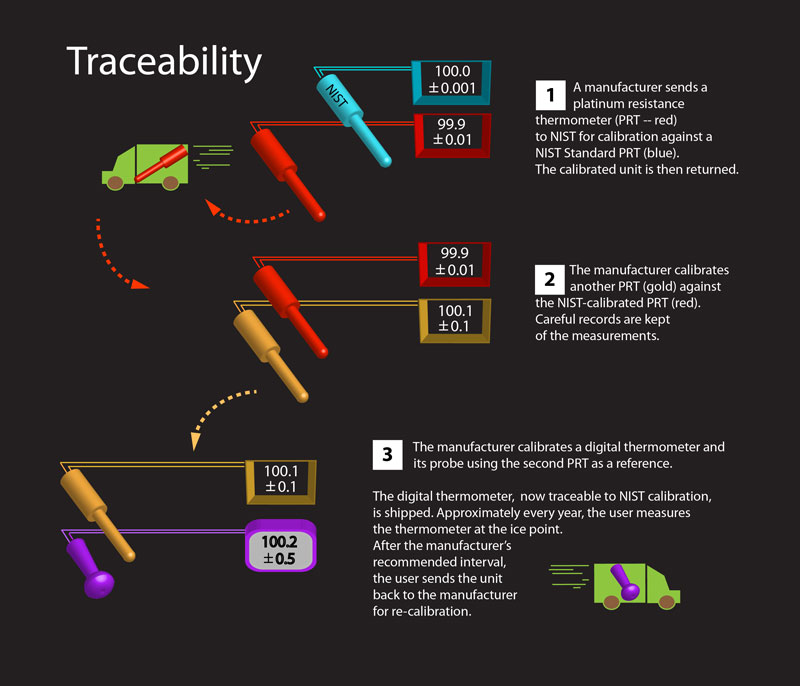
Accuracy is a strict requirement for regulatory compliance. E-Control Systems uses NIST-traceable calibration for our sensors. This means your hardware meets the highest national standards for temperature accuracy. You can prove to any inspector that your data is exact, reliable, and legally sound. By automating this process, your business stays perfectly aligned with the latest food safety regulations without adding extra work for your staff.
Redundant Hardware & Secure Cloud Intelligence
Our system isn’t just wireless—it’s “fail-safe.” We’ve engineered our hardware to ensure that your food safety temperature monitoring records are never interrupted, even in the worst-case scenarios.
Built-In Data Redundancy: Every sensor comes standard with internal data loggers. If you lose power or Wi-Fi, the sensor keeps recording. Once the connection returns, it “bursts” the data to the cloud so your logs have zero gaps.
Beyond Temperature: Monitor humidity, door status (open/closed), and dishwasher final rinse cycles to capture every critical control point.
Cloud-Secure Sync: All data is stored in our secure, redundant cloud with automated backups, ensuring your records are safe for years of historical audit reviews.
Enterprise Handheld Probes: Our IntelliCheck™ system turns any iOS or Android device into a professional HACCP tool. Use our stainless steel probes to automate data logging from the receiving dock to the serving line.
How Our IoT Temperature Monitoring Technology Works
Commercial kitchens are difficult environments for wireless signals. Thick stainless steel appliances and heavy walk-in freezer doors easily block standard Wi-Fi. E-Control Systems uses advanced radio frequency and IoT networks to punch through these physical barriers. This setup delivers reliable real-time monitoring food equipment data without dropped signals or dead zones.
Extended Battery Life
Facility managers need sensors that require minimal maintenance. Our wireless devices run on high-capacity batteries designed to last for years. This keeps your remote food service temperature logging active around the clock without the headache of constant battery replacements. You simply install the sensors and let the system go to work.
Data Buffering During Network Outages
Internet outages happen. When your facility loses its connection, our system keeps working. Our hardware features built-in store-and-forward data buffering. If the internet goes down, the local sensors continue to read and record temperatures internally. The exact moment your network comes back online, the system automatically pushes all stored data straight to the secure cloud. You never lose a single reading or face a gap in your compliance history.
Audit-Ready Temperature Automation for Every Stage of the Food Chain
Commercial Kitchens & Restaurant Groups
In a fast-paced kitchen, manual temperature logs are often the first thing to be “pencil-whipped” or forgotten. Our system automates the most critical points of your operation to ensure food safety without slowing down your line.
Automated Cooler & Freezer Monitoring: 24/7 wireless sensors eliminate the need for manual morning checks and protect against costly inventory loss during power outages or equipment failure.
Digital Line Checks: Replace paper clipboards with handheld probes that instantly sync to the cloud, ensuring every high-risk item is held at the proper temp.
Instant Mobile Alerts: Get notified via SMS or email the moment a walk-in door is left open or a compressor fails.
Food Production, Manufacturing & Warehousing
Large-scale facilities face unique challenges, from massive square footage to the rigorous demands of USDA and FDA oversight. Stability is the priority here.
Plant-Wide Coverage: Our Long-Range (LoRaWAN) technology penetrates thick stainless steel walls and spans massive warehouses, ensuring no “dead zones” in your data.
Processing Plant Stability: Monitor ambient temperatures and humidity in real-time during high-risk processing stages to prevent bacterial growth and maintain product texture.
Scalable Infrastructure: From raw ingredient receiving to final pallet storage, view your entire production floor on a single, centralized dashboard.
Institutional Foodservice & Cafeterias
Managing high volumes in hospitals, schools, or corporate cafeterias requires strict adherence to “Time as a Public Health Control.” We simplify the complexity of high-volume service.
Receiving & Loading Dock Security: Log temperatures the moment food arrives to ensure the cold chain was never broken by your suppliers.
Hot & Cold Holding Monitoring: Ensure steam tables and salad bars remain within the “Safe Zone” during peak service hours with discrete, waterproof sensors.
Simplified Compliance Reporting: Generate one-click reports for health inspectors that prove consistent monitoring across every station in your facility.
Food Temperature Monitoring FAQ's
What is a Food Temperature Monitoring System?
A food temperature monitoring system is a technology-enabled system that is designed to help food service providers and other professionals monitor and control the temperature of food products during various stages of the food handling process. This can include food storage, transportation, cooking, and serving.
Our E-Control System (ECS) for food service temperature monitoring consists of a complete wireless HACCP temperature monitor. For food service professionals this means the capability to monitor multiple systems from one place (yes, you can monitor from your smartphone). So, how does it work?
A variety of sensors, data loggers, and software that work together to collect and analyze data on the temperature of food products. The sensors are placed inside refrigerators, freezers, ovens, and other food storage and cooking equipment to monitor the temperature in real-time. The data loggers store all data collected by the sensors and transmit it to an ECS secure cloud with server redundancy and automated system backups.
Our ECS software then provides alerts and notifications to you if the temperature of the food products falls outside of safe levels. This helps to prevent food spoilage, reduce waste, and minimize the risk of foodborne illness. ECS also provides analytics and reporting features, which enable you to track and analyze temperature data over time, identify trends, and make more informed decisions about food safety and quality.
Our E-Control System (ECS) for food service temperature monitoring consists of a complete wireless HACCP temperature monitor. For food service professionals this means the capability to monitor multiple systems from one place (yes, you can monitor from your smartphone). So, how does it work?
A variety of sensors, data loggers, and software that work together to collect and analyze data on the temperature of food products. The sensors are placed inside refrigerators, freezers, ovens, and other food storage and cooking equipment to monitor the temperature in real-time. The data loggers store all data collected by the sensors and transmit it to an ECS secure cloud with server redundancy and automated system backups.
Our ECS software then provides alerts and notifications to you if the temperature of the food products falls outside of safe levels. This helps to prevent food spoilage, reduce waste, and minimize the risk of foodborne illness. ECS also provides analytics and reporting features, which enable you to track and analyze temperature data over time, identify trends, and make more informed decisions about food safety and quality.
How often should commercial refrigeration temperatures be recorded?
The FDA recommends food service operations check and record refrigeration temperatures at least twice a day. Checking manually only twice a day leaves huge gaps in your safety data. An automated food temperature monitoring system records temperatures continuously around the clock. This completely removes the guesswork and catches temperature drifts long before your food spoils.
Can I monitor my restaurant's walk-in freezer from my smartphone?
Yes. E-Control Systems provides dedicated iOS and Android applications for complete remote visibility. You can view the exact temperature of your walk-in freezers, coolers, and hot holding units directly from your phone. If a unit falls out of your safe range, the system sends an instant text or email alert right to your device.
What happens to the temperature data if my facility loses power?
Our wireless sensors feature internal data loggers with independent battery power. If your building loses electricity or the Wi-Fi goes down, the system continues recording. The sensors store all the data locally. Once power and internet return, the hardware automatically uploads all the saved data to the secure cloud. Your compliance reports remain perfectly intact.
What equipment do you use to monitor the temperature of food products?
Food service operations rely on a mix of digital thermometers, handheld probes, and wireless data loggers. We provide complete hardware solutions for every step of the process. This includes automated sensors for your refrigeration units and stainless steel handheld probes to quickly check food items on the prep line.
How Do You Track Food Temperature?
Temperature and time are the two most controllable factors for preventing foodborne illness. With this in mind, proper food temperature regulation is at the top of food safety priorities and protocol. With ESC food service monitoring system, tracking your food temperature is as easy as it has ever been.
Our completely wireless temperature monitoring system uses sensors to monitor food temperatures in real-time. The data collected by the sensors is transmitted wirelessly to a central monitoring system, which can be accessed remotely through your computer or mobile device.
It’s important to ensure that food is stored, cooked, and served at the correct temperature to prevent the growth of harmful bacteria and reduce the risk of foodborne illness. ESC eliminates the unnecessary hassle, making your life easier and your food safer, not to mention, the extra layer of protection it offers any business responsible for serving food.
What Are the Benefits of Food Monitoring Systems?
There are incredible benefits to implementing a HACCP temperature monitoring system powered by ECS. Top benefits can include:
- Improved food safety: One of the most significant benefits of food temperature monitoring is improved food safety. Proper temperature control is essential for preventing the growth of harmful bacteria that can cause foodborne illness. Monitoring food temperature helps to identify and address any potential issues before they become a food safety hazard.
- Reduced food waste: Monitoring food temperature can also help to reduce food waste. When food is stored or cooked at the wrong temperature, it can spoil more quickly, leading to waste. By ensuring that food is kept at the correct temperature, food waste can be minimized.
- Cost savings: In addition to reducing food waste, food temperature monitoring can also lead to cost savings. When food is stored and cooked at the correct temperature, it’s less likely to spoil, reducing the need to throw away food and replace it.
- Compliance with regulations: Many food service providers are required to comply with regulations related to food safety and temperature control. Implementing a food temperature monitoring system can help to ensure compliance with these regulations and prevent potential fines or penalties.
- Improved customer satisfaction: Serving safe and high-quality food can help to improve customer satisfaction and loyalty. By monitoring food temperature and ensuring that food is stored and served at the correct temperature, food service providers can deliver a better overall experience for their customers.
What Equipment Would You Use to Monitor the Temperature of Food Products and Their Environment?
There are various types of equipment that can be used to monitor the temperature of food products and their environment, depending on your specific needs. Here are some common examples:
- Thermometers: Digital, dial, or infrared thermometers are commonly used to measure the temperature of food products. They are inserted into the thickest part of the food to obtain an accurate reading.
- Data loggers: These are devices that can record and store temperature data over time. They can be used to monitor the temperature of refrigerators, freezers, and other storage areas to detect temperature fluctuations.
- Wireless temperature monitoring systems: Like our ECS system, these systems use wireless sensors to monitor food temperatures in real-time. The data collected by the sensors is transmitted wirelessly to a central monitoring system, which can be accessed remotely through a computer or mobile device.
- Temperature-sensitive labels: These adhesive labels change color when the temperature of the food exceeds a certain threshold. They are often used on packaged foods, such as meat and dairy products, to indicate whether the food has been stored or transported at safe temperatures.
- Infrared cameras: Infrared cameras can be used to monitor the temperature of cooking equipment, such as ovens and grills, without the need for physical contact with the food.
- Probe wipes: These are disposable wipes that can be used to sanitize thermometers and other temperature monitoring equipment between uses to prevent cross-contamination.
- Temperature-controlled transport containers: These are insulated containers that are designed to maintain the temperature of food during transport. They are often used in the foodservice and catering industries to transport hot or cold food safely.
By using a combination of these tools, you can ensure that food products are stored, cooked, and served at the correct temperature to prevent foodborne illness and maintain the quality of the food.
What Can You Monitor in Food Service?
In food service there’s a lot to monitor, from the quality of raw foods to cleanliness to serving perfectly prepared dishes. While you’ll need to find ways to monitor as much as you can, as best as you can, here are some things you can monitor in food service:
- Food temperatures. With the HACCP temperature monitoring system, food temperature is essential for ensuring that food is stored, cooked, and served at the correct temperature to prevent the growth of harmful bacteria that can cause foodborne illness.
- Equipment temperatures. Monitoring the temperature of cooking equipment, such as ovens, grills, and fryers, can help to ensure that food is cooked to the correct temperature and maintain the quality of the food.
- Sanitation. Monitoring the cleanliness of food preparation areas, equipment, and utensils is essential for preventing cross-contamination and the spread of harmful bacteria.
- Food quality. Monitoring the quality of food products, such as freshness, flavor, and texture, can help to ensure that customers are satisfied with their meals and maintain loyalty.
- Inventory management. Monitoring inventory levels and usage can help you minimize waste, reduce costs, and ensure that they have the necessary ingredients and supplies to prepare meals.
- Customer feedback. Monitoring customer feedback, such as reviews and surveys, can help you identify areas for improvement and make changes to meet customer expectations.
By monitoring these aspects of food service, you can ensure that you’re providing safe, high-quality food that meets the needs and expectations of your customers.
What is GMP?
GMP stands for Good Manufacturing Practice. It’s a set of guidelines and procedures designed to ensure that food products are consistently produced and controlled in a manner that meets quality and safety standards.
GMP guidelines cover all aspects of food production, including the design and construction of facilities, equipment maintenance and calibration, employee training and hygiene, and record-keeping. The goal of GMP is to prevent contamination, cross-contamination, and other errors that can lead to unsafe food products.
GMP is widely used in the food industry and is required by many regulatory agencies, such as the Food and Drug Administration (FDA) in the United States and the European Medicines Agency (EMA) in the European Union. Compliance with GMP guidelines is often monitored through inspections and audits to ensure that food production facilities are operating in a safe and efficient manner.
Is Temperature Monitoring a Legal Requirement for Food Service?
Yes, absolutely. Temperature monitoring is a legal requirement for food service in many countries, including the United States, Canada, the United Kingdom, and the European Union.
As a food service provider, you’re required to monitor the temperature of food products to ensure that they’re stored, cooked, and served at safe temperatures to prevent the growth of harmful bacteria that can cause foodborne illness.
Regulatory agencies, such as the FDA in the United States, provide specific guidelines for temperature monitoring in food service, including the use of calibrated thermometers and temperature recording devices, as well as requirements for the frequency of monitoring and the corrective actions to be taken in the event of temperature deviations.
If you fail to comply with temperature monitoring requirements you may be subject to legal penalties, including fines, loss of operating licenses, and legal action by customers who become ill as a result of consuming unsafe food products.
ECS’ technical innovations have been driven by the desire to meet the ever-changing market needs and increasing regulatory requirements related to monitoring of food, drugs, manufacturing processes and controls (including HACCP, The Joint Commission, AABB, GLP/GMP, FCC, and FDA). Never be caught unaware or uninformed regarding your food service temperature monitoring system. ECS provides food safety and storage temperature monitoring for schools, restaurants, food processing and production plants, grocery stores, convenience stores, cafeterias, and much more.
At ECS, we provide food safety and storage temperature monitoring for the following industries:
- Schools
- Restaurants
- Food Processing & Production Plants
- Grocery Stores
- Convenience Stores
- Cafeterias
- Commercial Refrigeration
- Refrigerated Trucks & Trailers
- Wine Storage
- And more
How does an automated temperature monitoring system improve accuracy compared to manual checks?
Manual readings are inconsistent because they depend on employees to remember, record, and interpret temperatures. When a cooler fails between manual checks, it may go unnoticed for hours, and food spoilage will occur. Our E-Control Systems IntelliCheck™ System automates temperature data to continuously catch all deviations that can compromise food safety and eliminates manually written data. You and your staff can access the temperature data from anywhere at any time.
What makes kitchen temperature monitoring critical during busy service hours?
Kitchen temperature monitoring ensures ingredients stay within safe ranges, preventing bacterial growth and reducing the risk of foodborne illness. This protects guests, prevents equipment from failing, ensures restaurant staff follow safe protocols, and protects the restaurant's reputation. You can conveniently monitor food temperatures using E-Control Systems FusionLive dashboard 24/7.
Can food industry temperature monitoring systems be customized for different types of equipment?
Food temperature monitoring systems can be outfitted with interchangeable steel probes and wireless sensors, allowing one system to serve multiple cooking stations without compromising safety or accuracy. The E-Control Systems FusionLive dashboard and alerts can be customized to manage the temperature of each operation and to comply with HACCP regulations.
What are the cost savings of investing in a food temperature monitoring system?
Predictive food industry temperature monitoring systems are able to detect subtle temperature fluctuations signaling equipment potential breakdowns before they occur. This helps food businesses avoid expensive emergency services and reduces disruptions and downtime. They also have the capability to streamline recordkeeping and create digital reports, to avoid fines and failed inspections.
What types of food service equipment can temperature systems monitor?
- Walk-In Coolers and Freezers
- Reach-in Coolers and Freezers
- Milk Coolers
- Hot and Cold Holding Units
- Under Counter Units
- Dishwasher Final Rinse Temperature
- Dry Storage
- Cold Storage
- Power Interruption
- Cook or Chill Units
- Food Temperatures
- Oven Temperatures
Do automated food service monitoring systems work during power outages?
E-Control Systems food service monitoring systems are web and app-based and can be used with cellular service so alerts can be transmitted 24/7 via mobile data. Each sensor is equipped with data loggers that store your data during power outages and restore it when the power outage ends. Whether you need to move inventory, dispatch staff, or activate a backup generator, the data will show a complete audit trail of when the outage occurred, how long it lasted, and if any temperatures reached unsafe levels. This information can be critical for insurance claims and HACCP compliance.
How does a food safety monitoring system support long-term HACCP temperature monitoring and compliance?
Our wireless food safety monitoring system creates a digital log about what’s happening in your facility. You can monitor everything from storage to cooking to serving, preventing inventory loss and complying with HACCP regulations. Our system makes it easier to adjust your HACCP plan to ensure food safety and prevent risks. Track performance, access live data, and system alerts from your smartphone so you stay informed and in control of your business operations.
At ECS, we provide food safety and storage temperature monitoring for the following industries:
- Schools
- Restaurants
- Food Processing & Production Plants
- Grocery Stores
- Convenience Stores
- Cafeterias
- Commercial Refrigeration
- Refrigerated Trucks & Trailers
- Wine Storage
- And more
Our Solutions